Algebra
16 units
-
Problems that purely involve algebraic manipulations without some other context, e.g. solving rather arbitrary equations or systems of equations.
-
Problems involving some real analysis. This is a pretty technical lecture and will delve into the nuances of converge issues, absolute versus conditional convergence, using calculus properly, compact sets, and so on. Featuring the art of Lagrange multipliers.
-
Roots of unity. Using $e^{i \theta} = \cos(\theta) + i \sin(\theta)$, and connecting them to trigonometry, etc. Features a ton of problems from Math Prize for Girls. Despite the name of the unit, cyclotomic polynomials themselves don't appear very often; the idea of roots of unity is much more prevalent.
-
Based on Yang Liu's class "Write Down Formulas" at MOP 2018. This unit consists of problems which involve manipulations of fairly involved formulas, such as combinatorial recursions or number theoretic power sums. Despite officially being algebra, there are just as many (maybe more) problems that would be classified as C or N.
-
Generating functions and their use in algebraic contexts (computing sums, featuring the so-called snake oil method). Of course, some combinatorial problems included as well.
-
A unit featuring some of the hardest gems from the golden age of inequalities.
-
The basics of inequalities: AM-GM, homogenization, Cauchy/Holder.
-
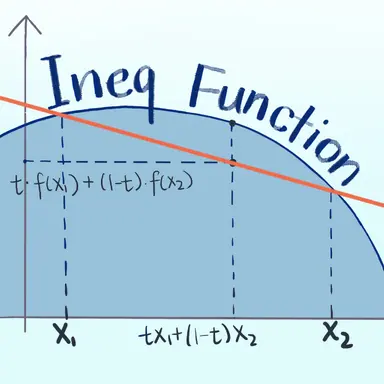
Techniques for inequalities of the form $f(x_1) + ... + f(x_n)$. Jensen, Karamata, tangent line trick. The $n-1$ equal value principle is deferred to Ineq Standard.
-
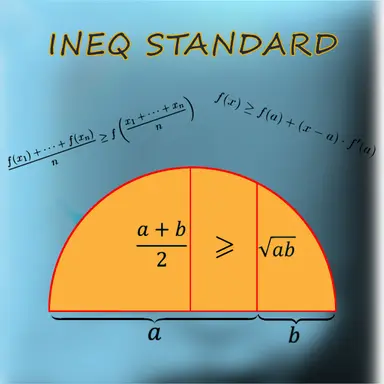
Inequalities which can be approached using all the standard methods. This is sort of a combination of Ineq Basic and Ineq Func.
-

Was your calculus class too easy for you? Do you want to stare at random artificial expressions having no idea how to find their antiderivative? If so, this unit is for you! Enjoy a student-contributed guest unit featuring problems from integration bees from MIT and other places.
-
Problems about showing polynomials are irreducible; these are rare in olympiads, but give you a lot of good intuition about how $\mathbb{Z}[x]$ polynomials behave. Techniques that appear include working in $\mathbb{F}_p[x]$, looking at the magnitude of complex roots a la Rouche, and other ad-hoc tricks. More olympiad algebra than the integer polynomials unit.
-
An extension of the Sums unit --- rather than just swapping infinite sums, we now get to enjoy swapping infinite integrals as well.
-
General polynomials unit, maintaining some distance from integer polynomials (though still overlapping slightly). Includes Vieta/Newton, multivariable polynomials, Lagrange interpolation, size arguments, differentiation.
-
Practice with manipulating sums, and in particular switching the order of summation (or integration). Features generating functions and Snake Oil as well. The Gen Func unit is an optional prerequisite.
-
Vieta formulas, Newton sums, and the fundamental theorem of symmetric polynomials. Involves some computational problems. In my opinion, this is probably the easiest unit.
-
Harder inequality problems that don't succumb to the standard methods: it takes some more ingenuity to figure out how to approach these.